

The Real Reason People Avoid AI And It Is Not What You Think
We often assume people avoid AI because they are resistant to change or uninterested in technology. That is almost never the real reason.
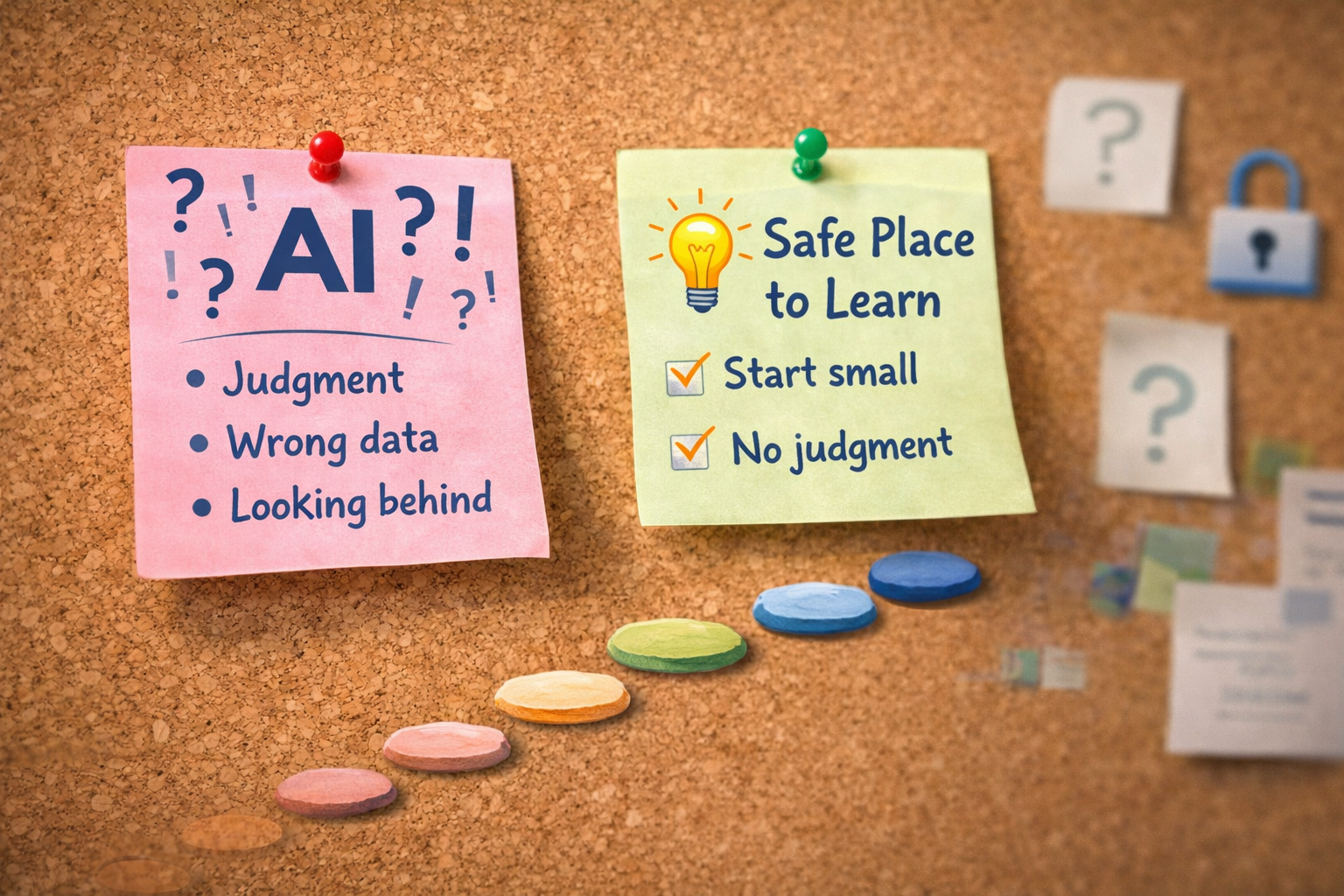
People avoid AI because they do not feel safe trying it.
They are afraid of doing it wrong.
Afraid of using the wrong data.
Afraid of looking like they do not know enough.
Afraid of being judged for asking basic questions.
These fears are normal. They are common. And they are rarely discussed.
Once we understand that AI hesitation is emotional, not technical, we can actually help people move forward.
1. Fear of judgment slows learning
Most adults have not been beginners at something in a long time. Being new at something is vulnerable. AI adds another layer. It moves fast and the language can feel intimidating.
So people stay quiet. They wait for someone else to go first. They assume everyone else understands more than they do.
The moment we normalize that AI learning feels awkward at first, people relax. And when people relax, they experiment more.
2. Fear of using the wrong data is real
Many professionals want to try AI, but they worry about putting something sensitive into a model.
This fear is valid, but it’s also solvable.
With a simple safety checklist, people begin to trust their own judgment:
Remove personal or confidential information
Keep sensitive data out of prompts
Use AI for structure, rewriting, and ideation
When people understand what is safe to input, they feel empowered instead of anxious.
3. The first experience with AI matters the most
If a person’s first interaction with AI feels confusing, they will avoid it. If their first interaction gives them a small win, they will come back to it.
AI adoption grows through:
simple instructions
approachable workflows
low pressure experimentation
supportive environments
Not through technical explanations.
4. Leaders influence AI comfort more than they realize
When leaders learn out loud, they remove the stigma. When leaders share their messy prompts, they normalize imperfection. When leaders say “I struggled with this at first too,” they open the door for questions.
Psychological safety creates adoption. Not policy, not tooling, not hype.
5. The safest path is the strongest path
When people feel supported, they move from fear to curiosity. They start asking questions. They try small things. They build confidence through tiny wins.
AI becomes less of a threat and more of a tool.
A supportive place to start
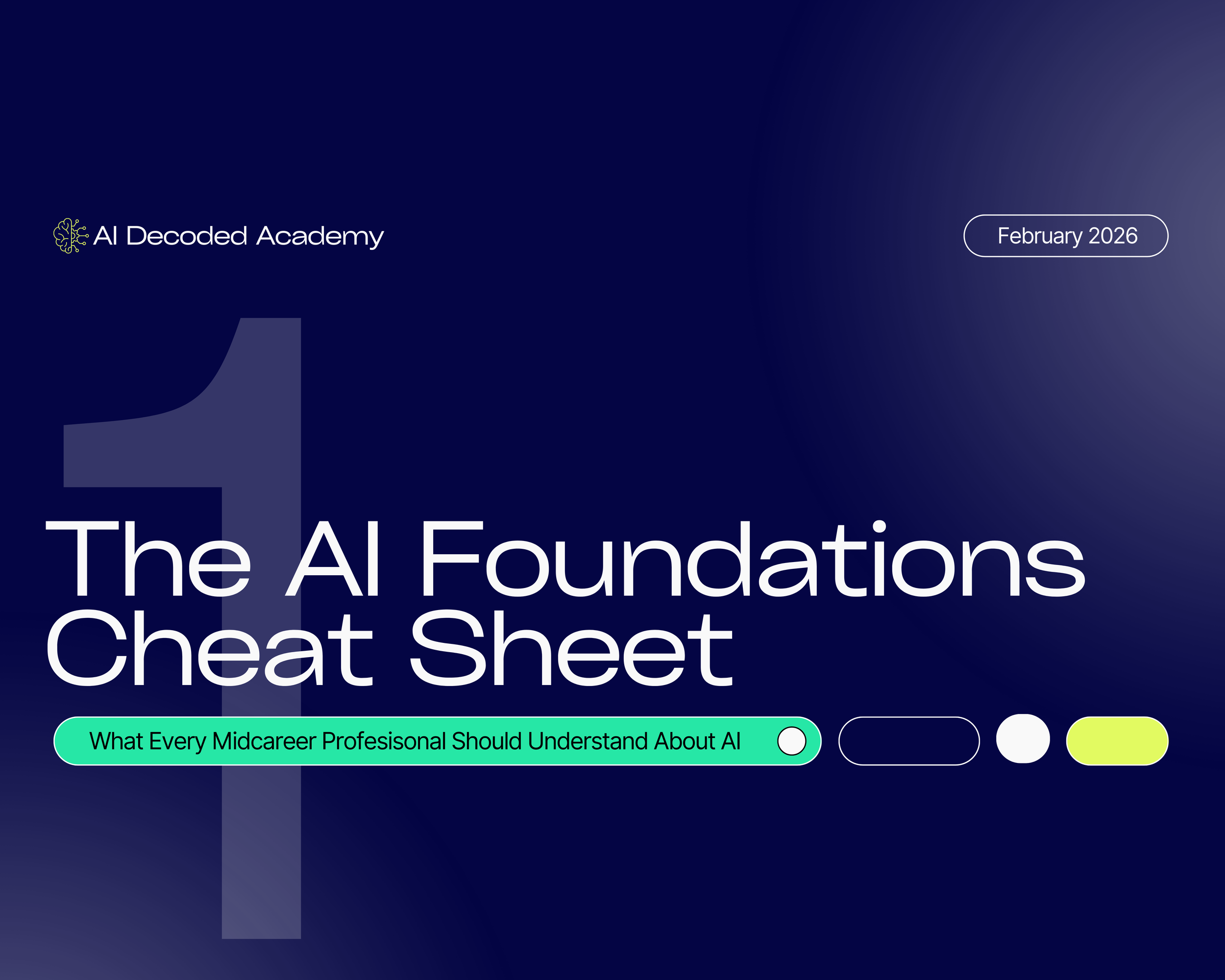
Your practical, no-fluff guide to understanding Artificial Intelligence in the real world.
If you’ve ever wondered “What is AI really?” or “How do I use AI in my work and life?” - this guide was built for you.
AI Decoded Academy | The AI Foundations is a clear, beginner-friendly introduction to artificial intelligence, designed to help professionals, students, and curious learners build true AI literacy without needing a technical background.
This free guide breaks down complex AI concepts into simple, practical insights you can actually use.
If you want to feel more comfortable with AI or help your team feel less overwhelmed, I created a free guide that breaks down the basics in a simple, safe way. No judgment. Just clarity.
AI hesitation is not a sign of weakness. It is a sign that people are human. And when we support humans, they learn.
