

Go Bananas: What a Baseball Team Taught Me About Designing Experiences, Not Just Deliverables
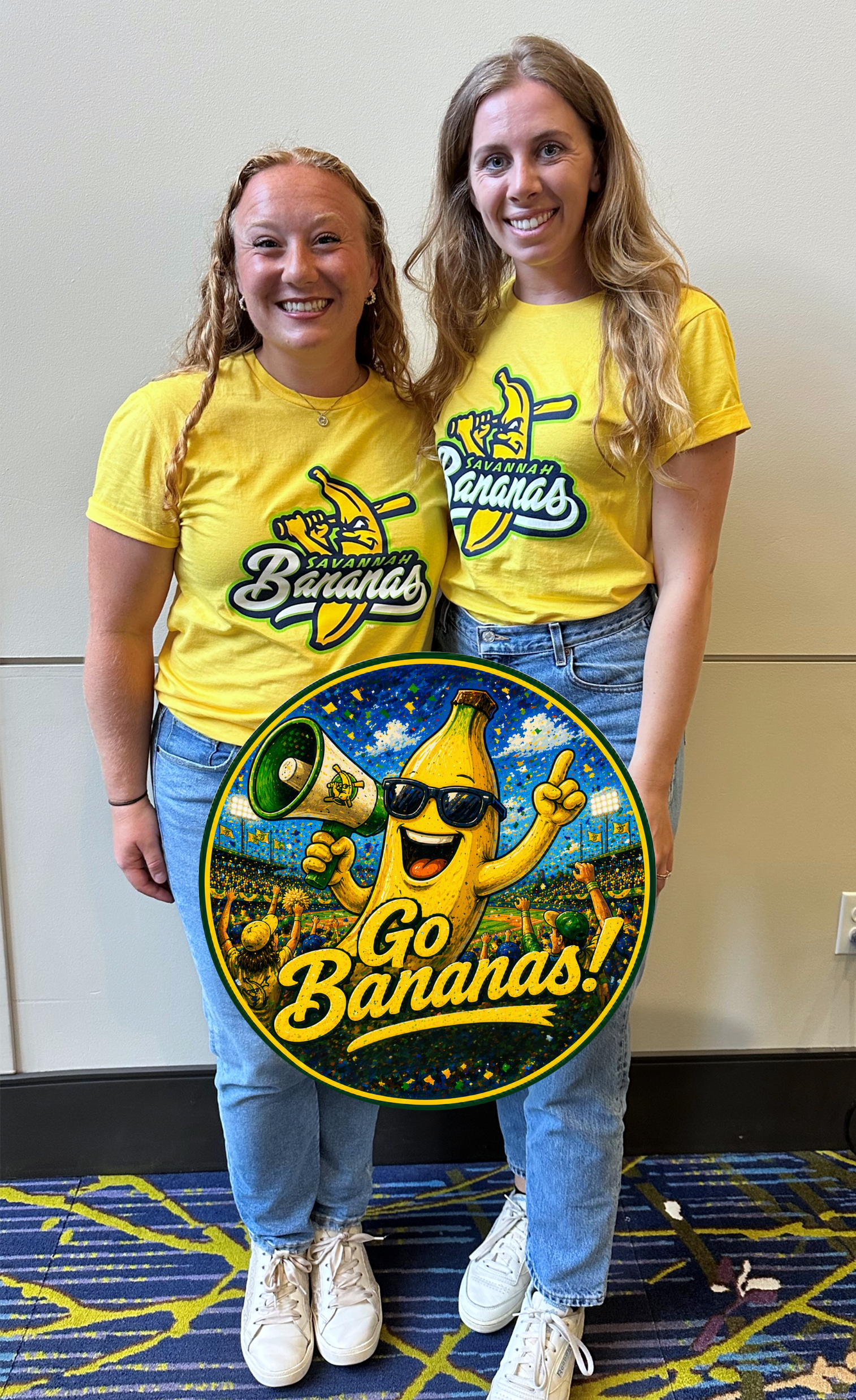
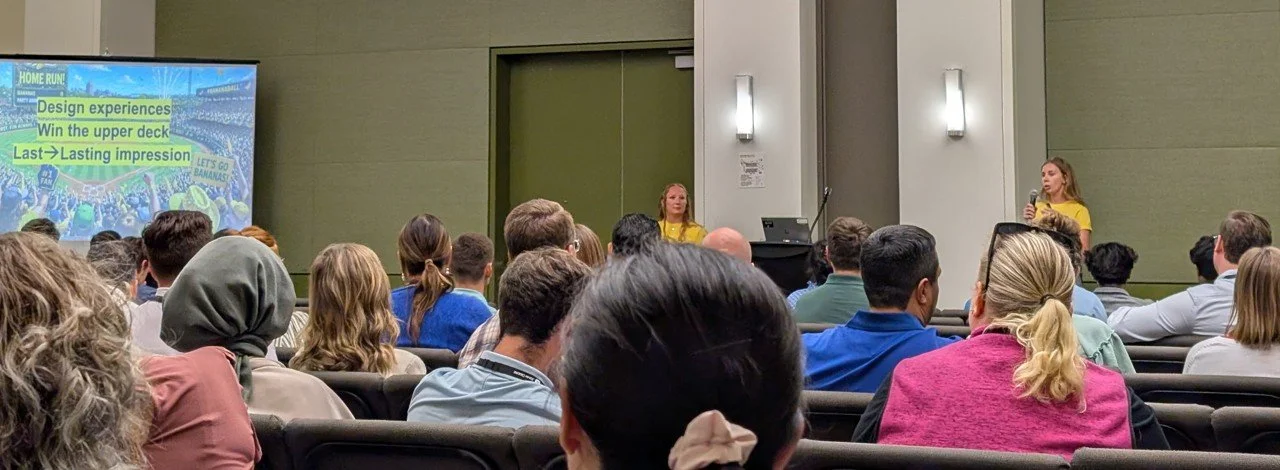
I recently had the opportunity to present a session at the John Deere Business Insights & Analytics Conference called Go Bananas: Building Champions for Your Ideas.
At first glance, a presentation inspired by a baseball team famous for dancing players, yellow tuxedos, and sold-out stadiums might seem like an unusual addition to a conference centered around data, analytics, and business insights. But the more we studied the Savannah Bananas and their founder, Jesse Cole, the more we realized they had solved a challenge that many of us face every day in our professional lives.
What fascinated me most was that the Savannah Bananas were never really solving a baseball problem.
Instead, Jesse Cole recognized that people had more choices competing for their attention than ever before. Streaming services, social media, sporting events, concerts, and countless other forms of entertainment were all fighting for the same finite resource: time.
So instead of asking, "How do we become a better baseball team?" the organization asked a much different question:
"How do we create a better experience for our fans?"
That shift in thinking changed everything.
The Same Challenge Exists in Analytics
As we prepared for our presentation, we kept asking ourselves what a baseball team could possibly teach a room full of analysts, engineers, scientists, and business leaders.
The answer became surprisingly clear.
As professionals, we're often exceptionally good at being right. We validate assumptions, challenge bad data, build sophisticated models, and develop recommendations backed by evidence. Accuracy matters. It builds credibility and helps earn influence.
But being right doesn't automatically create impact.
Most of us have experienced this firsthand.
You've spent weeks building a dashboard, conducting an analysis, or developing a recommendation. You finally get time on someone's calendar. You walk through the findings. Someone says, "Looks great."
Everyone nods.
Then the meeting ends.
Nothing changes.
The dashboard wasn't broken. The analysis wasn't flawed. The recommendation wasn't incorrect.
The work simply never became bigger than the meeting itself.
Remember. Repeat. Rally.
Think about the best presentation you've ever attended.
Years later, what do you actually remember? Probably not slide 27. You probably remember a story, a phrase, a visual, or a moment that stuck with you long after the presentation ended.
That's important because ideas spread through people. If people can't remember your message, they can't repeat it. If they can't repeat it, they'll never rally around it.
The goal isn't simply to help someone understand your dashboard. The goal is to help them carry the message forward when you're no longer in the room.
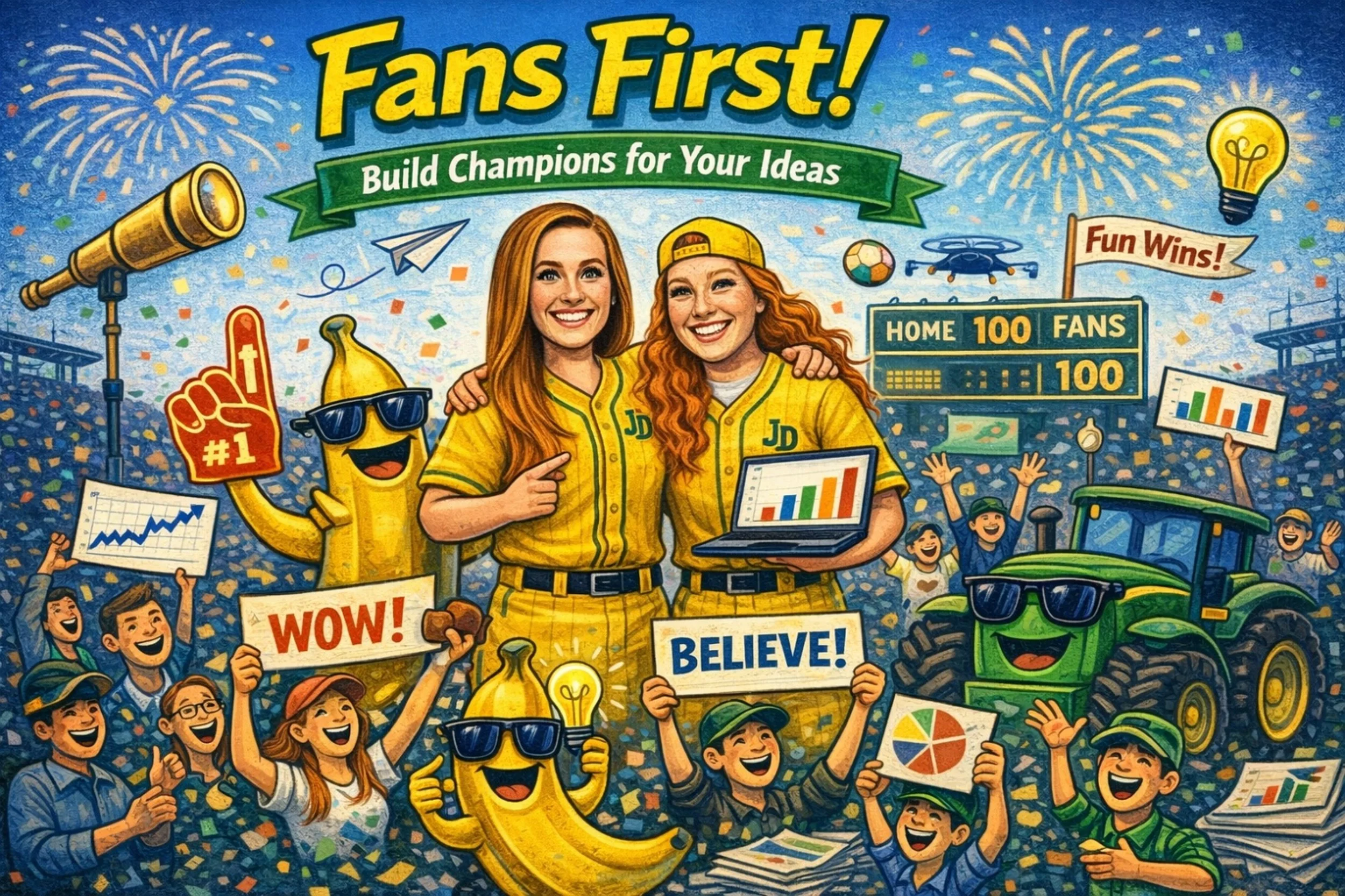
A Fans First Mindset
One of my favorite concepts from the Savannah Bananas is their decision-making filter.
Before making decisions, they ask a simple question: Is it Fans First?
Not:
Is it easier for us?
Is it how we've always done it?
Is it what everyone else is doing?
Instead:
Will this create a better experience for the fan?
The more I thought about that question, the more broadly applicable it became.
What if we applied that same filter to our own work?
Before sending the email.
Before building the dashboard.
Before creating the report.
Before presenting the recommendation.
Before adding another slide to the presentation.
Is it Fans First?
Because people don't become fans of dashboards.
They become fans of:
Clarity
Confidence
Direction
Momentum
Designing Experiences Instead of Deliverables
One of the biggest lessons I took away from studying the Savannah Bananas is that they don't leave memorable experiences to chance. They intentionally design them.
That idea challenged me to think differently about communication.
Many of us focus on the information we're delivering:
What metrics should I show?
What details should I include?
How many slides do I need?
Those aren't bad questions. But they may not be the most important questions.
A better question might be: What experience am I creating?
When we shift our thinking from delivering information to designing experiences, our work changes. We begin looking for stories that create connection. We simplify complexity without sacrificing substance. We create memorable moments that help ideas survive beyond the meeting itself.
After all, nobody has ever walked out of a room saying:"That methodology section changed my life."
But people do remember stories. People remember visuals. People remember phrases they can repeat.
And often, that's what creates momentum.
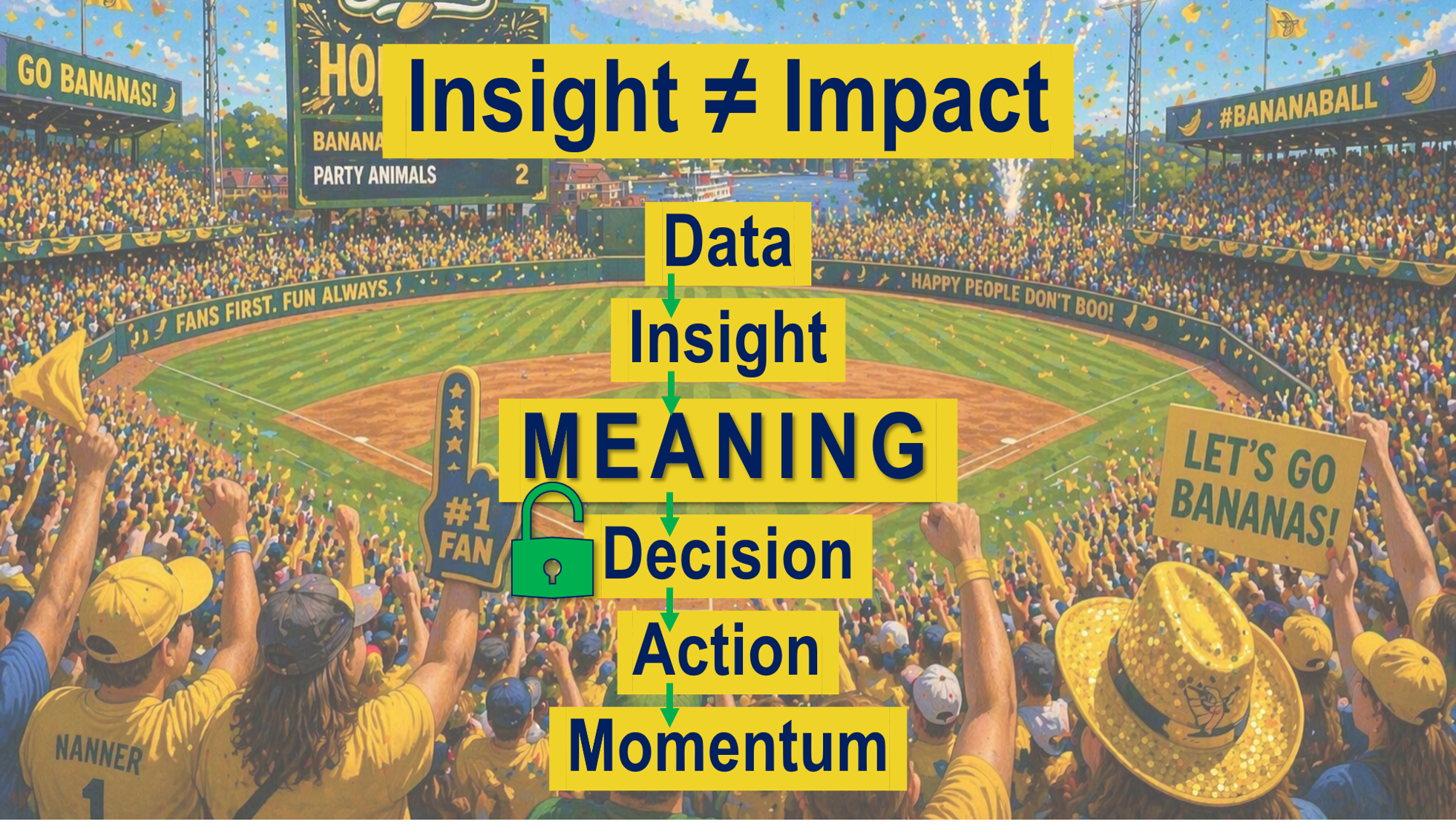
Insight does not equal impact.
Too often, we celebrate when we reach the insight stage.
We complete the analysis. We publish the dashboard. We send the report. We check the box and move on. But the business hasn't moved on yet.
Real impact happens after the insight.
Data creates insight.
Insight creates understanding.
Understanding creates decisions.
Decisions create action.
And action creates momentum.
The true measure of success isn't whether we explained the dashboard. It's whether someone walked away knowing what to do next.
The Real Takeaway
The Savannah Bananas often say they're not in the baseball business. They're in the entertainment business.
I think there's a powerful lesson in that for all of us.
Whether we're analyzing data, leading teams, developing products, supporting customers, or driving organizational change, our goal shouldn't simply be to be heard.
Our goal should be to be remembered. Because when people remember an idea, they'll repeat it. When they repeat it, they'll rally around it. And that's when ideas become movements rather than meetings.
So the next time you're preparing a presentation, sharing an analysis, or introducing a new idea, consider asking yourself one simple question:
Is it Fans First?
You may be surprised how much that question changes the outcome.
